
Is real estate a good career? By the end of this guide, you’ll know whether becoming an agent fits your goals, your finances, and your comfort with commission-based pay.
The work can fit around your schedule and tie your income to your effort. It also lets you guide people through major life decisions. It comes with real trade-offs too.
Below you’ll find 10 reasons the career appeals to so many people. You’ll also get current salary and job-outlook data, a look at the daily work, the honest challenges, and answers to the questions people ask most.
Table of Contents
- Key Takeaways
- What a Real Estate Agent Does
- 10 Reasons Real Estate Is a Good Career
- Salary and Job Outlook
- Real Challenges Agents Face
- Questions to Ask Yourself
- Frequently Asked Questions
- How to Get Started
Key Takeaways
- Unlimited earning potential: Your income grows with your effort, and top full-time agents can earn six figures through commissions.
- Quick, affordable start: Licensing is accessible and often faster than a degree-based path, depending on your state.
- Flexibility and independence: You set your own schedule and manage your own path, which fits self-motivated people.
- Room to grow: Agents keep adding skills, adapt to market shifts, and can specialize in niches like luxury or commercial property.
- Dynamic work: No two days are the same, from client meetings to property negotiations.
- Meaningful impact: You help people make life-changing decisions like buying a first home.
- Honest challenges: Expect unpredictable income, competitive markets, and economic swings, so plan for the slow stretches.
What a Real Estate Agent Does
Before deciding whether real estate is a good career for you, it helps to know the day-to-day work. According to the Bureau of Labor Statistics, real estate brokers and sales agents help clients buy, sell, and rent properties. Brokers can run their own businesses, while sales agents work under a broker.
In practice, that work usually includes the following:
- Meeting clients to learn what they want to buy, sell, or rent, and what they can afford.
- Pricing properties by comparing similar homes and current market conditions.
- Marketing listings through advertising, open houses, and listing services.
- Showing properties and taking buyers to see homes that fit their needs.
- Presenting and negotiating offers between buyers and sellers.
- Preparing paperwork such as purchase agreements, leases, and closing documents.

10 Reasons Real Estate Is a Good Career
These 10 reasons cover what draws people to real estate: how you earn, how you spend your day, and who tends to thrive. Use them to judge fit before you weigh the salary data and challenges below.
1. Real Estate Is a Lucrative Career
Most agents work on commission, so your income grows with the effort you put into closing deals. In a 2024 survey of Colibri Real Estate alumni, the average agent salary was $153,000, and top performers earned more.
Because pay is tied to closings, motivated full-time agents can earn well above the national median. See the salary section below for the full picture.
Download Our Free Real Estate Salary Guide
2. Demand Comes From Turnover and Skill
The Bureau of Labor Statistics projects about 2% job growth for real estate agents and brokers from 2025 to 2035, slower than average. That modest headline number isn’t the whole story.
The BLS also projects roughly 40,400 openings each year, mostly from workers who retire or change careers. Buyers and sellers still rely on agents for pricing, negotiation, and complex paperwork.
The National Association of REALTORS® reports, in its 2024 Profile of Home Buyers and Sellers, that 90% of sellers used an agent. The opportunity here comes from turnover and skill, not a booming growth rate.
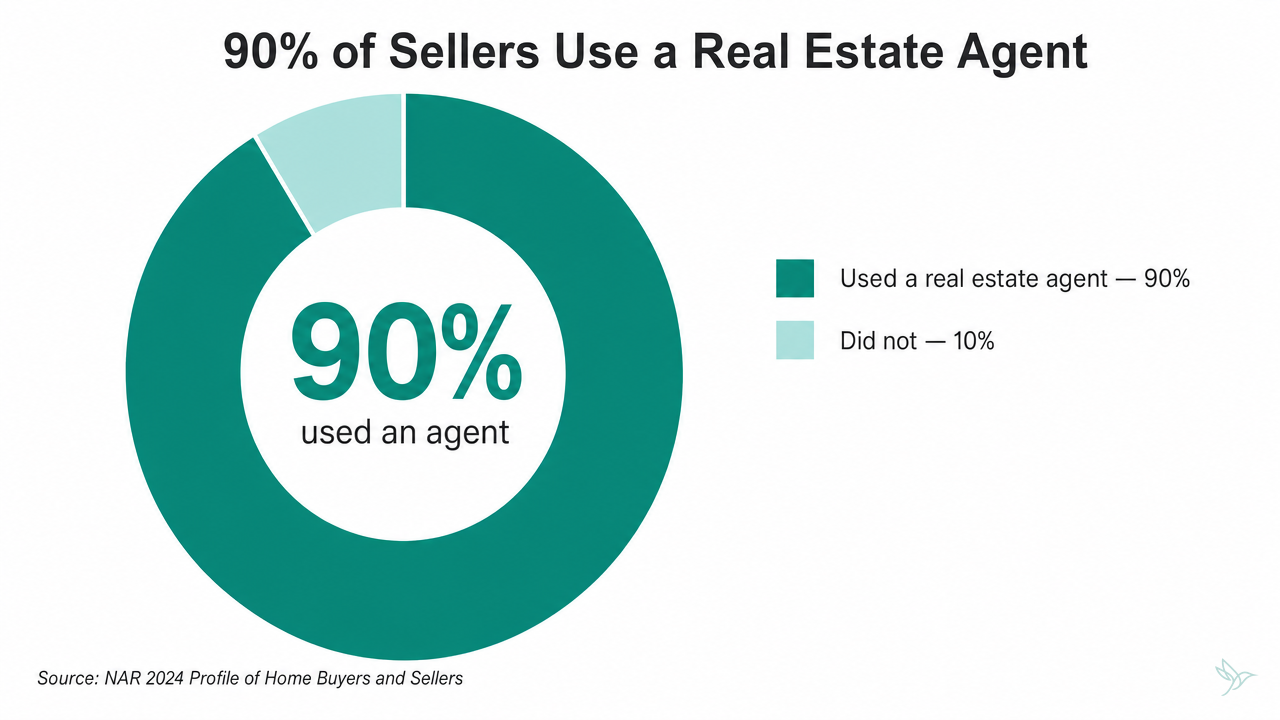 90% of Sellers Use a Real Estate Agent. Source: NAR 2024 Profile of Home Buyers and Sellers.
3. Starting Is Faster and More Affordable Than Most Careers
Unlike careers that require years of study and expensive degrees, you can become a licensed agent in a matter of months. Requirements vary by state but generally involve pre-licensing courses, a licensing exam, and a background check.
On top of that, real estate training generally costs far less than a four-year degree. That short timeline and lower cost make it a practical option for career changers.

4. Flexibility and Autonomy Attract Self-Starters
A real estate career suits people who value independence and like running their own show. With no fixed schedule, you manage your own time around personal and professional priorities.
You decide which clients to take on, when to show homes, and how to market yourself. Just plan for irregular hours, including evenings and weekends, to fit client schedules.
5. Real Estate Provides Networking and Social Opportunities
Do you like meeting new people and building long-term relationships? Real estate runs on them. Networking ranges from coffee meetings with potential clients to working alongside other professionals.
Referrals and repeat business often grow out of these relationships, so networking is real work that drives income.
Learn More: 10 Critical Skills of Real Estate Agents
6. You Get to Be Your Own Boss
Real estate attracts people with an entrepreneurial streak. As an agent, you take charge of your own path, choose your niche market, and set your own marketing strategy.
Brokers oversee and support licensed agents, but you make the day-to-day decisions about your business.
7. The Work Is Dynamic and Varied
No two days in real estate are the same. You might scout properties, negotiate a deal, and meet new clients in a single day.
That mix of working with people, analyzing the market, and closing deals keeps the work varied and engaging.
8. You Keep Learning and Building Skills
Real estate gives you room to keep building skills over time. The field shifts with the market, new technology, and changing regulations, so there’s always something new to learn.
You might master new marketing tools, learn new financing options, or add a specialty like luxury homes, commercial property, or investment real estate. That steady growth helps agents adapt to any market.
9. You Can Grow Into a Broker or Specialty
You control how far your career goes. You might focus on becoming a top producer, earn certifications, or move up to a broker who oversees other agents. You set the goals, and steady effort opens the next step.
10. Real Estate Is a Meaningful Career
Few things are as rewarding as helping someone buy their first home or sell a place they love. Agents play a key role in one of the biggest financial and emotional decisions their clients make. By helping families find the right home or manage a relocation, you make a real difference in people’s lives.

Salary and Job Outlook for Real Estate Agents
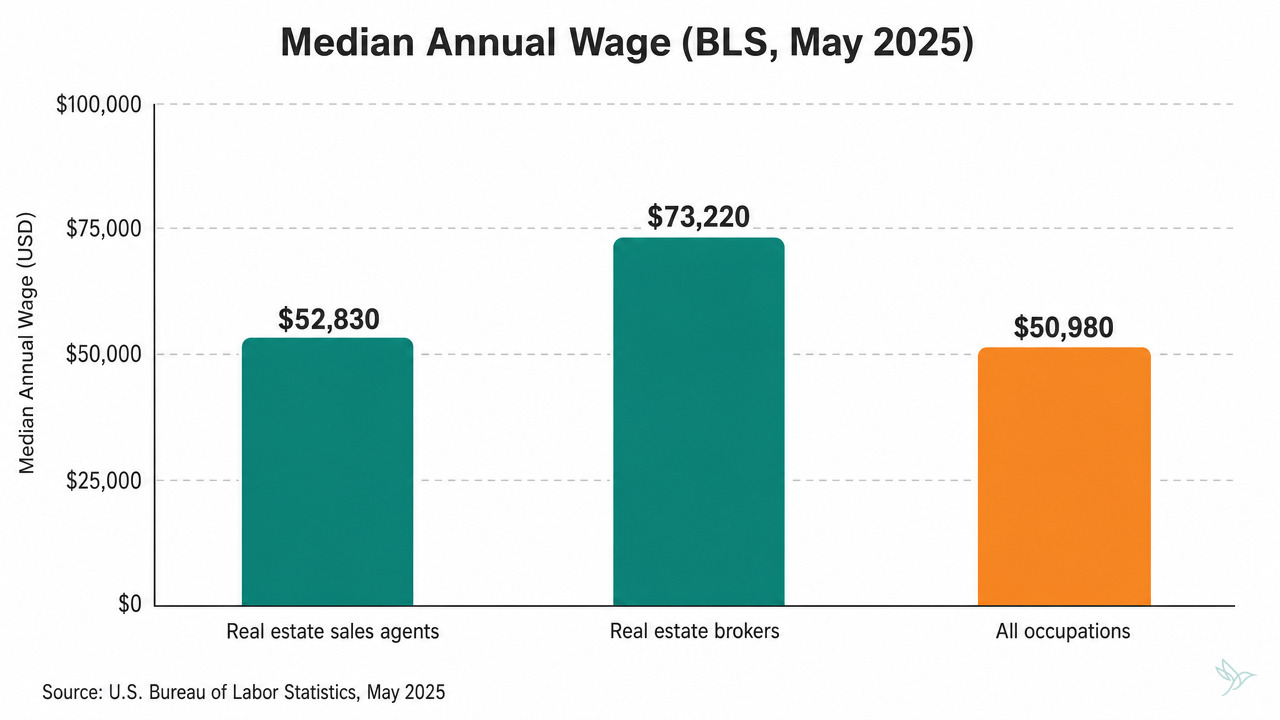
Median Annual Wage (BLS, May 2025). Source: U.S. Bureau of Labor Statistics.
Income is often the deciding factor when people ask, “Is real estate a good career?” The honest answer is that pay varies widely, because most agents work on commission. National data gives you a realistic baseline.
According to the Bureau of Labor Statistics, here is what agents and brokers typically earned as of May 2025:
Role | Median Annual Wage (May 2025) |
|---|---|
Real estate sales agents | $52,830 |
Real estate brokers | $73,220 |
All occupations (for comparison) | $50,980 |
Those medians include part-time and newer agents, which pulls the middle number down. Committed, full-time agents often earn more.
In Colibri Real Estate’s 2024 alumni survey, the average reported salary was $153,000, with top performers earning more. Treat that as a survey of motivated Colibri graduates, not a universal average. See the disclaimer at the end of this guide.
Want to dig deeper into commissions, expenses, and state-by-state pay? Explore the Colibri Real Estate salary guide for agents.
Real Challenges Real Estate Agents Face
Real estate offers real benefits, but success comes with challenges. It helps to understand the potential downsides before you commit to getting licensed.
Unpredictable Income
Because earnings are commission-based, income can vary from month to month. That uncertainty can be stressful if you’re used to a fixed salary. Budgeting and financial planning are essential skills for long-term success.
Competitive Environment
Real estate is an entrepreneurial business. You generate your own leads, manage your client base, and build your reputation. Standing out takes constant effort.
Impact of the Housing Market
The housing market strongly shapes an agent’s prospects. Rising interest rates or lower demand can slow transactions and make deals harder to close. Agents with a strong work ethic and solid relationships still find ways to adapt.
Is Real Estate Right for You? Ask Yourself These Questions
It’s smart to weigh both the pros and cons before making a career switch. Ask yourself the following:
- Am I self-motivated? Building a career takes discipline, especially early on when finding clients can feel slow.
- Do I enjoy relationship-focused work? If you like engaging with people and serving their needs, the work can be fulfilling.
- Am I ready to trade steady pay for higher upside? Commission pay offers strong earning potential, but it rewards persistence during slow periods.
- Do I want variety day to day? From marketing homes to negotiating contracts, no two days are alike.
If you answered yes to most of these, compare your state’s licensing steps and startup costs next. It also helps to know which skills separate agents who last from those who don’t.
Is Real Estate a Good Career? Frequently Asked Questions
Is Becoming a Real Estate Agent Worth It?
Is real estate a good career for you? For many people, yes, though the honest answer depends on your goals and work style. Real estate rewards self-starters who can handle commission-based pay and generate their own clients.
If you want flexibility, uncapped earnings, and people-focused work, it can be very worth it. If you need a steady paycheck from day one, plan for a financial cushion while you build your business.
How Much Can You Earn Your First Year in Real Estate?
Earnings vary widely because agents work on commission. The Bureau of Labor Statistics reports a median annual wage of $52,830 for real estate sales agents.
First-year income is often lower while you build a client base. Your results depend on effort, market conditions, and whether you work full time.
What Are the Negatives of Being a Real Estate Agent?
The main drawbacks are unpredictable, commission-based income and the need to generate your own leads. The market also shapes your business, so high interest rates or low demand can slow sales. Steady budgeting and consistent lead generation help you manage the quiet stretches.
Is It Hard to Become a Real Estate Agent?
Getting licensed is relatively fast and affordable, and you can finish pre-licensing coursework in a matter of months. Succeeding takes more. Discipline, lead generation, and steady client service are what separate agents who last from those who don’t.
How to Get Started in a Real Estate Career

If real estate sounds like a fit, your next step is getting licensed in your state.
Colibri Real Estate offers pre-licensing courses for every state and is trusted by 1.5M+ alumni nationwide.
Because the courses are self-paced and backed by a Pass or Don’t Pay Guarantee, you can study around your schedule with less financial risk. Compare your state’s pre-licensing requirements and pick a course format that fits your life.
Disclaimer: This guide is for general informational purposes only, based on an August 2024 survey of Colibri Real Estate alumni and publicly available industry sources. While Colibri strives for accuracy, we make no guarantees regarding the completeness, reliability, or applicability of the information.
Earnings and outcomes vary widely based on factors like location, experience, and market conditions and should not be considered guarantees. This guide does not constitute professional advice. Users should consult additional sources for personalized guidance.
Master Real Estate FREE Starter Kit Here
More Real Estate Career Resources
- 5 Key Questions to Ask Before Choosing an Online Real Estate School
- Why Choose Colibri for your Online Real Estate Education
- Top 7 Social Media Influencers Who Made Their Fortune in Real Estate
- How Much Commission Do Real Estate Agents Make in Georgia?
- How to renew your real estate license in Michigan
- Why Real Estate’s One of the Best Careers for Women Who Dream Big
>


